
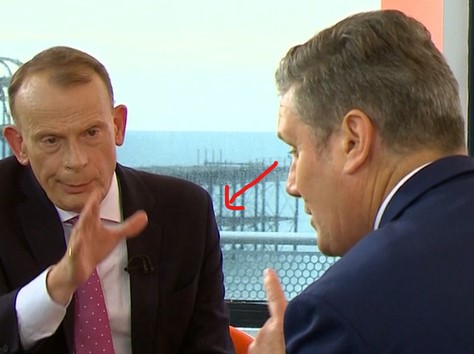
Kier Starmer, the Leader of the Labour party, was interviewed face-to-face on the Andrew Marr show this weekend. This was one of the first big face-to-face interviews Starmer has done in the last few weeks after COVID lockdown rules. Previous… Continue Reading →
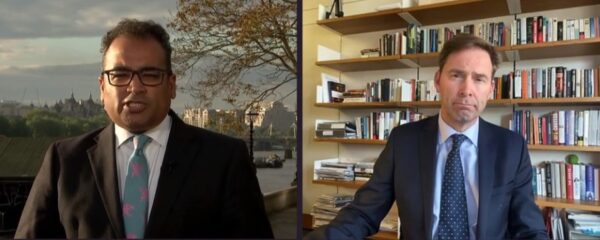
Sometimes asking questions in an interview is just not the right ‘structure’ if your interviewee does not want to answer them. Here we see Channel 4 news anchor Krishnan Guru-Murthy (KG) interviewing the Conservative MP Tobias Elwood (TE) who clearly… Continue Reading →
A lot was made on Twitter of Helen Watley’s appearance on Sky TV this morning. The claim by some distractors was that Whatley was saying that the government could blame scientists for mistakes made in the COVID-19 policy. Within ten… Continue Reading →
Political interviewers like to pretend that they are are asking genuine questions to their political guests. But sometimes it is revealed all too clearly that their questions are really designed to try and steer the guest towards a particular answer.
Andrew Neil interviewed Jeremy Corbyn on BBC television tonight. Neil is a forensic interviewer who usually pins his interviewees down to exact words and syllables. But Corbyn is know for his own brand of stubbornness, and there was one wonderful… Continue Reading →
Politicians often get accused of not answering questions but sometimes they fight back as Andy McDonald did on Friday.
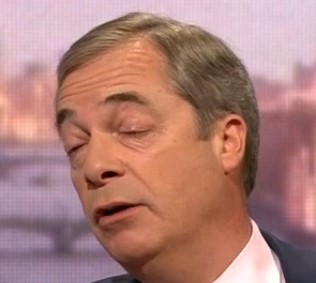
Politicians use all means to try and grab and hold the floor during interviews including non-verbal means. Nigel Farage has developed an interesting technique where he flutters his eyes for a few seconds, almost bringing them to a close, in… Continue Reading →
Fight for control of the floor can sometimes produce odd utterances out of the mouths of the interlocutors. Here is Boris Johnson and Nick Robinson spluttering syllables like bird wings flapping in the air as they fight for the turn… Continue Reading →
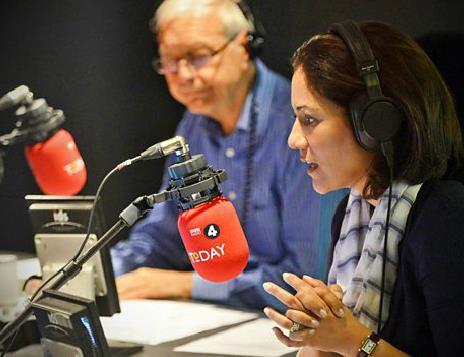
Political interviewing can be a frustrating affair when the politician being interviewed refuses to answer directly the questions put to them. John Humphrys, a BBC radio 4 presenter and interviewer, gave Chris Grayling, a Conservative MP, a grilling on the… Continue Reading →
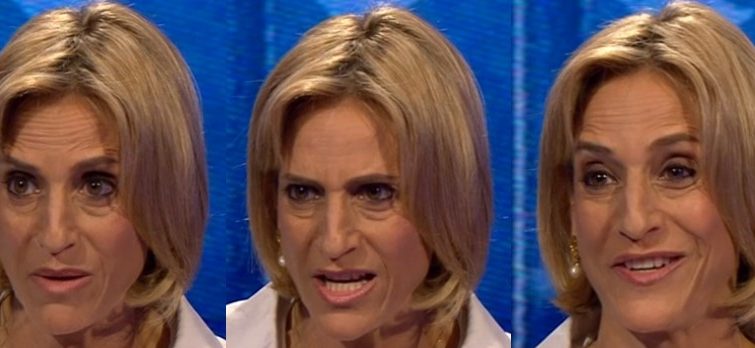
Political commentators and journalists all have their own idiosyncratic styles when interviewing politicians. Emily Maitlis, the BBC Newsnight commentator, often shows exasperation and incredulity in her voice through sweeping intonation falls and facial expressions. Here is a brief analysis to… Continue Reading →
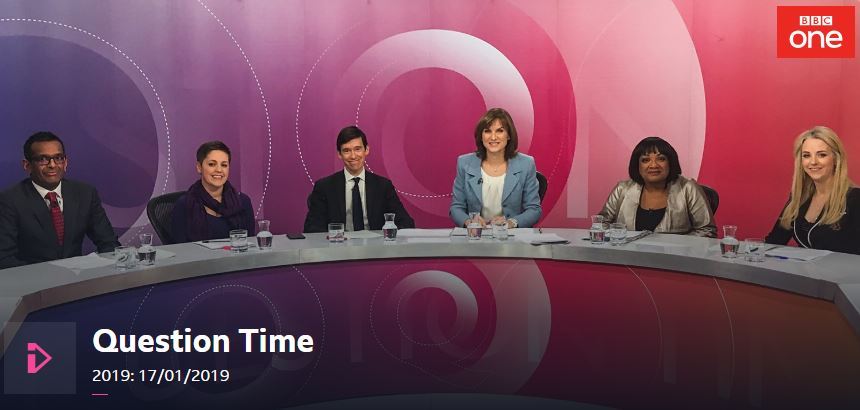
Editor: The BBC’s Question Time programme on Thursday nights seems to court controversy these days as we hold it to ever more stringent impartiality standards. In this blog, Elena Ioannidou dissects the discourse that this programme produces from a CA perspective…. Continue Reading →
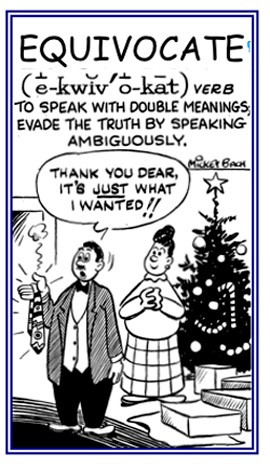
Editor: This is part 2 of the blog on the BBC Question Time programme. Part 1 is here.
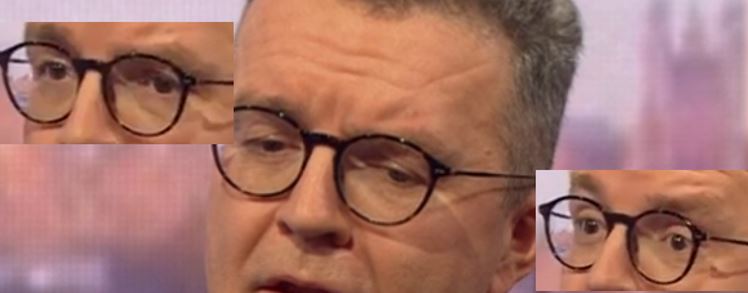
The eyes play an important part in human communication. They can signal an intention to communicate and sometimes act to facilitate turn transition. In this example here, we see Tom Watson, the Deputy Leader of the Labour Party, using his… Continue Reading →
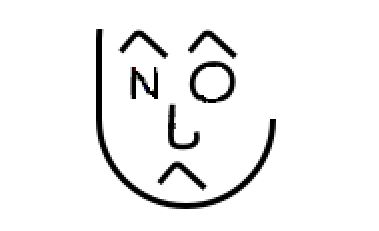
Theresa May seems to have developed many ways of saying ‘no’ without actually meaning it. In her interview with Andrew Marr at the weekend, she frequently used reduced articulations of the word (e.g. ‘n-’) to preface her responses to Marr’s… Continue Reading →
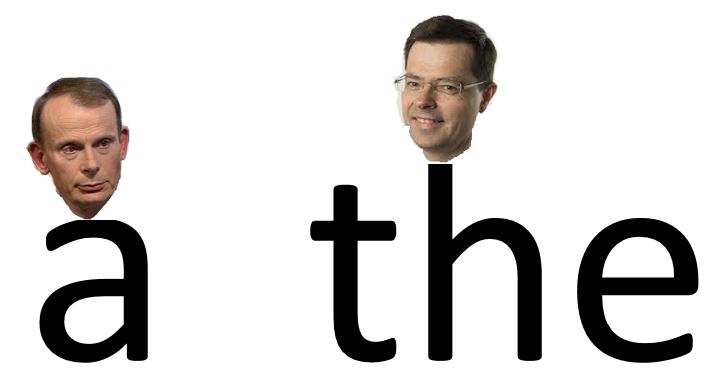
It seems strange that two of the smallest and most commonest words in the English dictionary could cause confusion between interviewer and interviewee but that is what ‘a’ and ‘the’ seemed to do on Sunday when Andrew Marr interviewed James… Continue Reading →
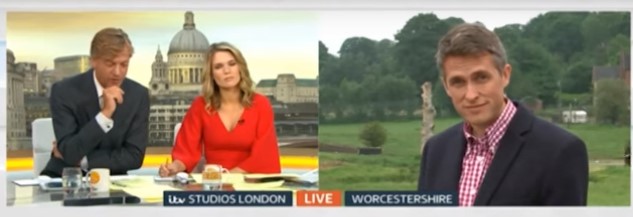
Richard Madeley knows when to shut down an interview. On ITV’s Good Morning Britain, he abruptly brought his interview with Gavin Williamson, the Defence Secretary, to an end when Williamson refused to answer his question after four strikes.
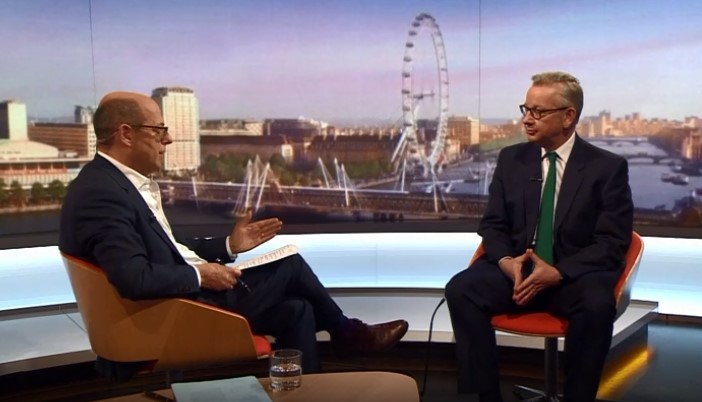
Interviewers don’t always get what they ask for but when they do, it can often cause difficulties for the interview.
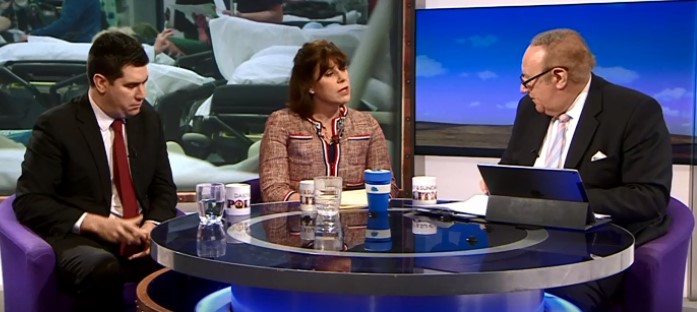
Claire Perry, Conservative MP, seemed to enjoy asking questions on the Daily Politics today, so much so that Andrew Neil feared she was angling for his job.
Interviewers are always looking for ways to hurry their interviewees along, so finishing off their ideas seems to be a nice way to do this with the added advantage that you get the floor back. Why wait for the slow… Continue Reading →
In day-to-day conversation, closing a conversation requires both participants to clear the floor. That is, each has to offer the floor to the other and only when neither has anything more to contribute can the conversation close. If you have… Continue Reading →
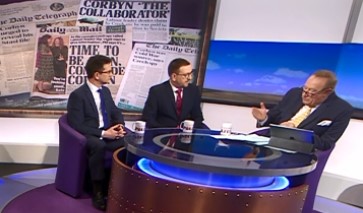
Andrew Neil was on fine form as he returned to hosting the Daily Politics on BBC1 on Wednesday. After chewing up Labour’s Andrew Gwynne, he turned his attention to Steve Baker, the Conservative Member of Parliament for Wycombe.
In general, only one person can hold the floor in a conversation. When a debate is taking place, there are often periods where negotiation of the floor occurs. The current speaker will use rhetorical devices to try and maintain the… Continue Reading →

TV presenters in a political interview have the privilege of asking the questions, but what do you do when your interviewee refuses to answer outright and brushes up against the Cooperative Principle? This is what Kay Burley, Sky News presenter,… Continue Reading →
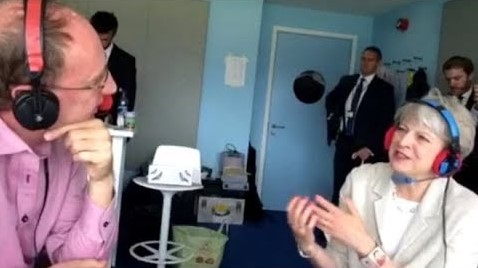
Pausing briefly while speaking is a natural part of delivery. We pause for several reason. The most obvious one is to take breath so we can carry on speaking. Some pauses occur before content words or complex clauses suggesting that… Continue Reading →
The word ‘twat’ has a checkered history in the English language. Originally coined to mean ‘female genitalia’, although famously misued by Robert Browning in his poem ‘Pippa Passes’ (1841), it has recently been used to refer to an ‘obnoxious or… Continue Reading →

Jessica Bott continues her series on ‘equivocation’: When a politician is equivocating there are multiple ways they can avoid answering a question. Often a politician will have a preferred way to equivocate and avoid using some of Bull’s categories. In… Continue Reading →
Jessica Bott continues her series on ‘equivocation’: When a politician is equivocating there are multiple ways they can avoid answering a question. In Bull and Mayer’s study of Thatcher and Kinnock interviews in 1993 they categorised these into eleven super-ordinate… Continue Reading →
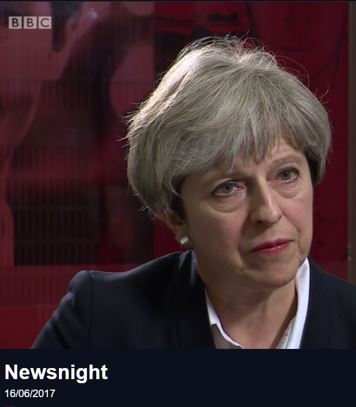
Emily Maitlis interviewed the Prime Minister, Theresa May, on Newsnight last night regarding the Grenfell Tower fire disaster. The Prime Minister had been criticised for not talking to the residents of the area when she had visited the site during… Continue Reading →
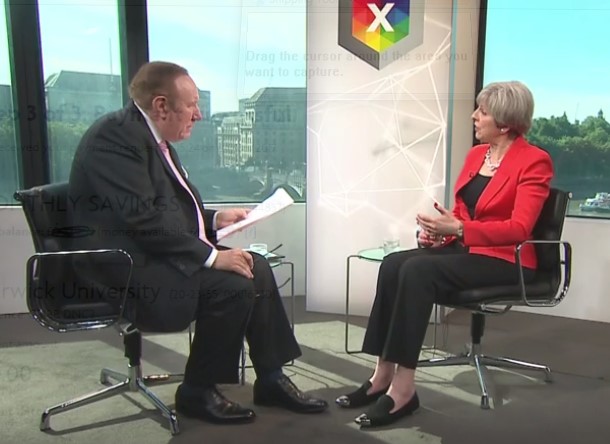
Andrew Neil interviewed the Prime Minister, Theresa May, on Monday. Neil held back from his typical ‘bull-dog’ style attack that is a regular feature of his Daily and Sunday Politics programmes. Politicians often leave with visible ‘bite marks’ from these… Continue Reading →
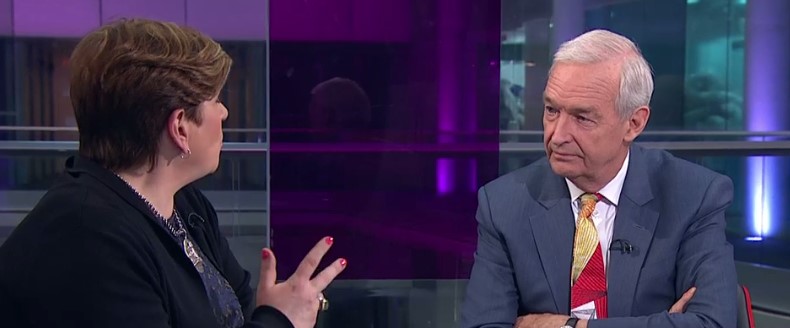
Pausing in a political interview can be taken the wrong way and have consequences for the ensuing discourse. Here is Emily Thornberry (ET) pausing for 1.3 seconds (line 05) during a TV interview on Channel 4 news with Jon Snow… Continue Reading →
There is a good example here of a politician being put in a tight corner on spending by the interviewer and having to equivocate. In the second part the pressure to equivocate is revealed in the increased hesitation in the… Continue Reading →
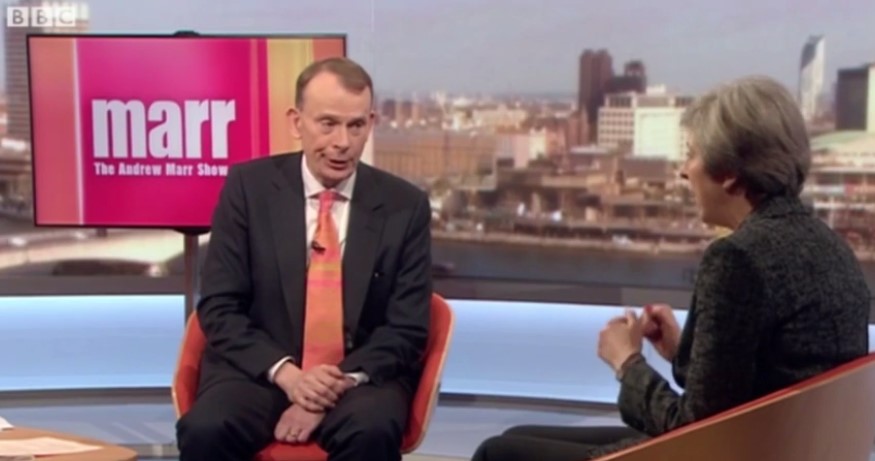
The weekend seemed to be the time for dodging questions for politicians up and down the politician spectrum. Theresa May was dodging questions on a nuclear missile test. Jeremy Corbyn was dodging questions on whether he would use whips in… Continue Reading →
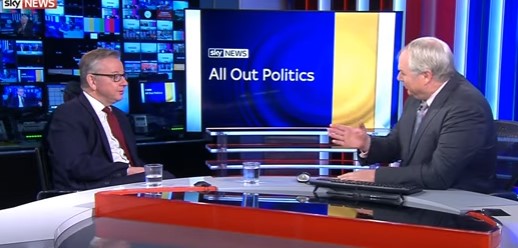
MPs sometimes have to eat humble pie and admit that they have made a mistake. In an earlier blog, I showed how Michael Gove MP used all his political rhetoric to make a historic U-turn on running for the Conservative… Continue Reading →
Just as the new football season gets underway with the same old tricks and moves, so the new political seasons kicks off this week. Andrew Neil (Daily Politics interviewer) went up against David Gauke (Conservative MP) in the first penalty… Continue Reading →
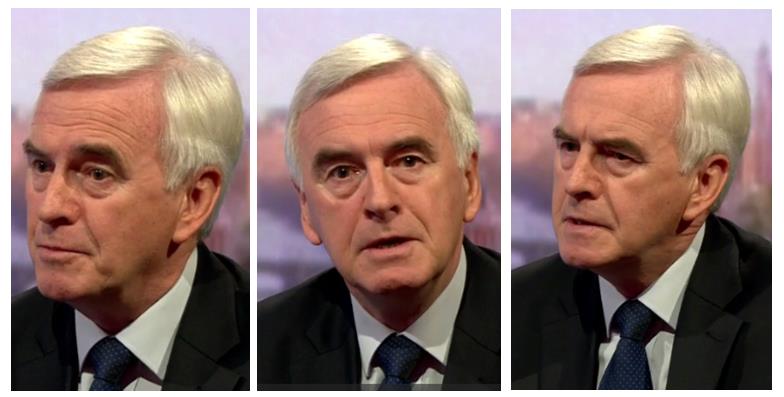
In face-to-face communication, the eyes (and eye gaze) are the most powerful part of the body we have. John McDonnell illustrated this on Sunday when he directly turned to the camera during an interview on the Andrew Marr show (BBC)…. Continue Reading →
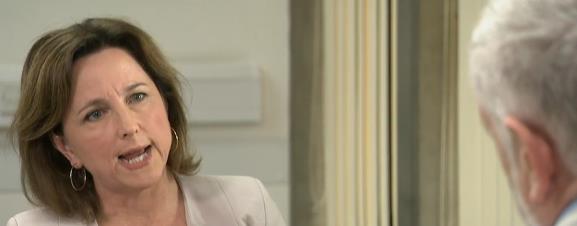
Jeremy Corbyn got a little ‘tetchy’ in his interview with Jackie Long on Channel 4 news yesterday. Corbyn seems to have these moments when being interviewed on national TV particularly when he is running for a leadership contest. Here he… Continue Reading →

RM
© 2026 — Powered by WordPress
Theme by Anders Noren — Up ↑
