
What is nonrepresentational linguistic idealism (NLI)?
NLI is a philosophical position that puts the mind at the centre of reality and language at the centre of the mind. It asserts that thought is linguistic in nature and we can only ever be conscious of linguistic ideas. Language does not represent the physical world but is the world itself. Language is the DNA of the human mind.
Does it assume that the physical realm is a figment of our imagination and does not really exist?
No, it does not. It assumes that there is a physical world out there but this world is indeterminate to us. All we ever consciously know is linguistic in nature.
Which has priority, the linguistic realm or the physical realm.
Neither. NLI does not take a position on which is prior or more ‘real’. NLI deals with what we experience as human beings rather than what is.
Who else believes in this stuff?
Emanuel Kant is taken to be the father of idealism. Thomas Hofweber is an modern-day exponent of the belief. Christian Bath and Richard Gaskin are prominent linguistic idealists. I do not know of anyone except myself who is a nonrepresentationalist although there are several proponents of anti-representationalism which is a different position.
If I accept NLI, how will it change my life?
It won’t. It is just a philosophical position that you can run through your mind from time to time.
Is NLI a sort of religion?
No, NLI makes no claims about whether there is a God or not.
For a full description of Nonrepresentational Linguistic Idealism, see the following three posts:
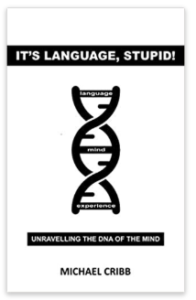
The theory is specified in more detail in my book It’s Language Stupid:

It’s Language Stupid: unravelling the DNA of the mind

1 Pingback