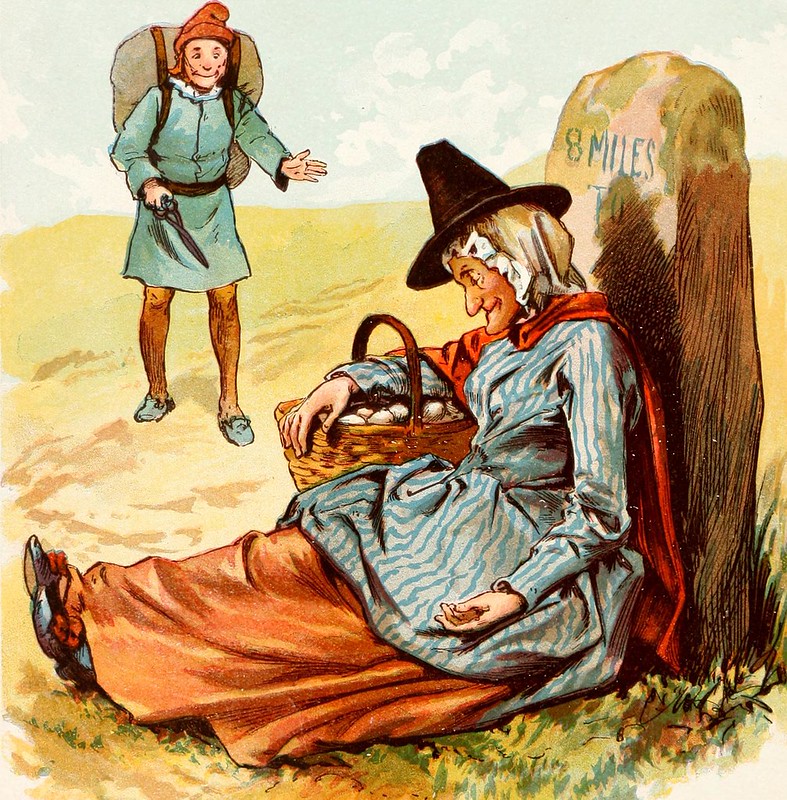
As I was going to St. Ives I met a man with seven wives,
Each wife had seven sacks, each sack had seven cats,
Each cat had seven kits: kits, cats, sacks and wives,
How many were going to St. Ives? [Answer = one]
Most children know the answer to this nursery rhyme is one – only one person is going to St Ives, the narrator, because all the others are leaving St. Ives.
Let me change the rhyme somewhat to illustrate a point:
As I was going to St. Ives
I was joined by seven men and their brains
Each brain had a mind
How many minds were going to St. Ives?
You might think the answer to this puzzle is eight assuming that all the men joined me in travelling to St. Ives. Each man had a brain and I infer that each brain instantiates a mind. Eight brains equals eight minds, right?
8b = 8m (third-person)
But what is a mind? If we take that a mind is a first-person subjective account of experience then there is only one mind going to St. Ives, mine!
8b = 1m (first-person)
The mathematics seems somewhat suspect here. How can we say that eight brains are going to St. Ives but only one is a mind? From a third-person, scientific point of view we appear to have eight minds. I infer that each of the men has a mind of their own. But from a first-person perspective, I can only ever experience my own mind. There is only ever one first-person perspective and that is always the one that I am experiencing now (and as I travel to St. Ives).
Language is both the problem and the solution to the hard problem of consciousness.
Language is both the problem and the solution to this conundrum. If we take the third sentence of the new rhyme we see that the last word names the first-person subjective experience that I am having at the moment: m-i-n-d.
Each brain had a mind
Language does this. It takes subjective experiences and names them. We can then pluralise the name as in ‘m-i-n-d-s’ and it is easy to see how we can arrive at the answer ‘eight minds’ going to St. Ives. But the language is not the subjective experience of mind that I am experiencing at the moment. And I am pretty sure that I have never experienced more than one mind at any time in my life and never will.
We tend to fall into this linguistic paradox regularly on a daily basis. As soon as we use language, we objectify an experience, but then it ceases to be the experience. This is essentially the hard problem of consciousness: how can a brain give rise to conscious, phenomenal experience? The answer is it can’t. Only language can.
How can a brain give rise to conscious, phenomenal experience? It can’t. Only language can.
It feels sometimes that with language our shoe laces are untied. We try to run but fall over. We pull ourselves up by our laces but then trip and fall down again. Our laces (aka language) are both the problem and the solution to our circumstance.
Header Image: “Gems from Mother Goose” (1899). Public Domain. https://www.flickr.com/photos/internetarchivebookimages/