
Chinese (Mandarin) has four different tones numbered 1 to 4: high level, rising, fall-rise and falling. These tones are often shown on the top of the vowel in the Pinyin systems for writing Chinese (eg. mā to indicate high level tone).
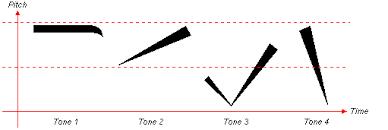
Tone in Chinese has a lexical function in that it can change the meaning of the word. (Unlike English where tone usually only shows attitude). So for example, the word ‘ma’ can actually have four different meanings depending on the tone that it is uttered with.
mā        má          mă          mà
mother    hemp        horse       scold
IPA Symbols
The IPA (International Phonetic Alphabet) can also indicate tone but does so in a slightly different way. The relevant part of the IPA chart for tone is shown below:

In these symbols the vertical part represents the pitch scale and the joining line represents the pitch level and change. So for example, the ˥ symbol represents an extra high tone. The four Chinese tones map onto the IPA in the following way:

Since these characters are not easy to insert into a Word document, they are not often seen.
English Tone
Tone in English is usually global so we normally represent it with one of the arrow symbols rather than the tone symbols shown above.
I can’t remember his ↘number
Sources
IPA (1999) Handbook of the International Phonetic Association. Cambridge University Press.

Leave a Reply
You must be logged in to post a comment.